
Is summer over yet?
I’ve written a lot about finding ways to enjoy winter for people who just can’t wait until the cold, dark days are over (hint: I revel in those cold, dark days!). For me, climate-wise my LEAST favorite season is summer. Here in Maryland, the summers get REALLY hot. That in itself isn’t so bad, but Maryland summers are also REALLY humid. (“The air you can wear”, we like to say.) Back in Pittsburgh, PA, where I grew up, we didn’t have the ocean (bay, technically) influence that Maryland has, and so I find myself in relative misery throughout most of July and August.
So that got me thinking – I need to take my own advice and find ways to enjoy “what is”, rather than what I wish it would be, during this time of year. Don’t get me wrong, there are things I enjoy about summer – like tending to my vegetable garden and harvesting “way too many” zucchini (now that I think about it, today is National Sneak Zucchini on Your Neighbor’s Porch Day!). I also like sitting out on the porch in the evening with our resident porch cats (Troublemaker and Big Daddy). But I really disdain walking outside and instantly being drenched by the sticky moisture in the air on a 90+ degree day. It’s no longer fun to be outside working in my garden. I find that this type of thick, hot, heavy air wears me down quickly – no energy, no motivation, and limited stamina to do what I need to do.

Yep, I need an attitude adjustment. So here it is! Let’s talk about some delicious, and deliciously hydrating and cooling herbs for those sticky, hot summer nights (and days).
Hibiscus
Hibiscus (Hibiscus sabdariffa) is by far my favorite summer cooling herb. It’s got a fruity, tart flavor that really grabs ya in a refreshing, iced tea. That deep, red color is what gives it that berry-like flavor and also its anti-oxidant super-power. Anti-oxidants protect against inflammation and cellular damage, and hibiscus is one of the best for promoting healthy blood vessels, blood pressure, and circulation.

Peppermint
Peppermint (Mentha x piperita), I think, is synonymous with “cooling”. Its high menthol content gives it that characteristic tingly sensation. That tingly sensation can promote relaxation, and peppermint, in general, has a calming effect all over the body. It can relax stomach spasms in the presence of indigestion. It can soothe tight muscles and tension headaches. Put some fresh (or dried) peppermint leaves in with your tea when you brew for a zesty zing. Or dilute some peppermint essential oil in a carrier oil and dab a few drops on your temples and breathe in the cooling, minty aroma to help wind down after a stressful day.

Lemon Balm
A relative of peppermint, lemon balm (Melissa officinalis) gets its name from the distinctly lemony aroma and flavor courtesy of the essential oils citral and citronellal. Lemon balm is known for relieving nervous tension and hyperactivity, and would be a good herbal tea to enjoy after a long, busy day. Some say lemon balm has a slightly sedative effect, so drink it before bed to promote restful sleep.
Like mint, lemon balm grows and spreads liberally in the garden, so once you get it started you’ll never be without (whether you want to or not!) For an instant pick-me-up, rub a leaf between your fingers to release the oils and take a whiff of that bright, cheery, lemony scent.

Holy Basil
Yet another relative of peppermint (and lemon balm), holy basil (Ocimum sanctum) has the added bonus of being an adaptogenic herb. That is to say, holy basil is very good at supporting our body’s ability to respond (i.e., adapt) to stress. It’s another zesty, aromatic herb that makes a refreshing iced tea. I love holy basil, also known as tulsi, so much that I wrote an entire blog post about it a while back.
Note that while holy basil is in the same genus as culinary basil, it has a very different flavor profile and I would not use it interchangeably with basil in your cooking. I do love the aroma, though. Because it grows unfettered in my garden I enjoy walking by the plants, gently brushing up against them to release the volatile oils that contain the vibrant, uplifting fragrance.

By the way, holy basil pairs quite nicely with hibiscus for a refreshing, tangy summer brew.
Lavender
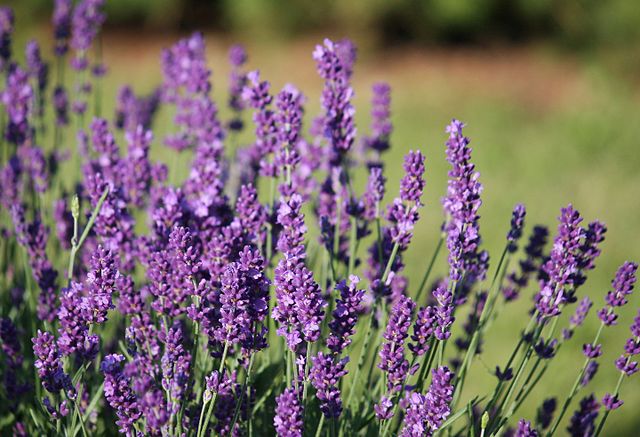
I’m not gonna lie. I don’t personally love lavender (Lavendula angustifolia). (But hey, my Mom doesn’t like hibiscus, so to each her own!) That isn’t to say that lavender isn’t an awesome herb great for promoting relaxation in the hot, summer nights. Known for its refreshing, floral aroma, try putting a couple drops of lavender essential oil in a spray bottle with distilled or filtered water and spritz your face and body for a relaxing, cooling treat. You can drink lavender in a tea as well, but for my money it’s just a little too “flowery” to drink.
Sage
Finally, I sneaked sage (Salvia officinalis) in my cooling herbs list not because it’s necessarily hydrating, but because it’s actually a drying herb. It’s used quite effectively for women dealing with hot flashes and night sweats. Thus sage tea would be a good herb to try on those hot, sticky days to not be so, well, hot and sticky.

Wrapping things up
Is it coincidence that all these herbs, except hibiscus, are in the mint family? (Lamiaceae for those keeping score) Not really. Lamiaceae herbs tend to be high in essential oils which provide those strong aromas that are released when the plant material is bruised or broken. We experience those oils in terms of pleasant fragrance and taste that bring a sense of balance, or joy, or whatever you may need at the time.
For me, in these challenging, hot, humid days and nights that suck my energy, I need my herbal partners to uplift my mood, cool my body and spirit, and remind me that (like winter?) “This, too, shall pass.”
Contact me:
Need some herbal support this summer, or any time of year? Reach out and let me know how I can help!