
When I told my friend I was giving a talk about ‘valerian’ at the annual Montpelier Herb and Tea Festival, he replied, “Isn’t that from ‘Game of Thrones’?”. Um…not exactly.🤣 Read on to learn all about this wondrous root to promote restful sleep.
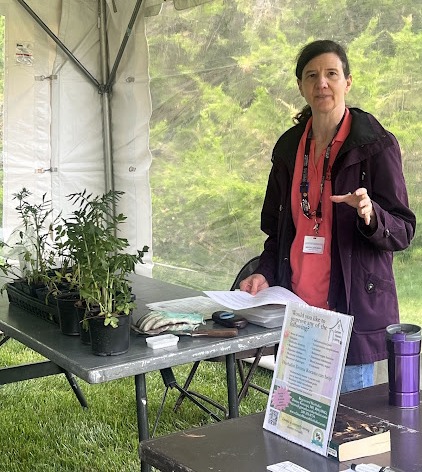
I chose valerian as this year’s topic for the festival largely because it’s spread all over my garden and I wanted to dig it up to make room for other plants. Indeed, I repotted 20 valerian sprouts to give to attendees of my lecture. The lecture was such a success – standing room only under the tent, many familiar, friendly faces from past lectures – that I thought I’d write a companion blog. Here goes!
NOTE: if you’re primarily interested in the therapeutic aspects of valerian, please feel free to skip right down to the Medicinal Use section.
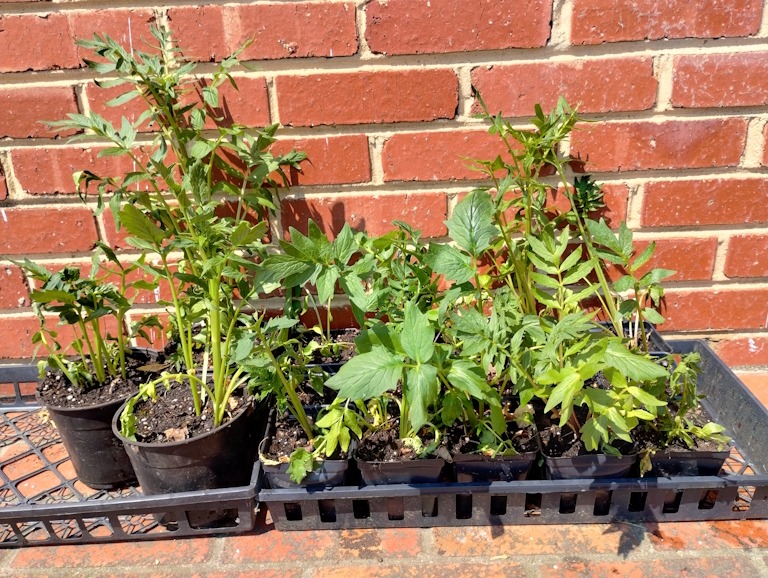
Description
There are more than 200 species of valerian, the most common of which is Valeriana officinalis and is the species I will discuss here. A perennial that dies back every winter, it grows between 2 and 5 feet tall. The leaves are ‘opposite’ and oddly pinnate, with 7-10 pairs per compound leaf, and it sends up a hollow stem with small pinkish-white flowers. A picture is worth 1000 words, but before we had pictures, we had Nicholas Culpeper, a 17th century British herbalist who described valerian thusly:
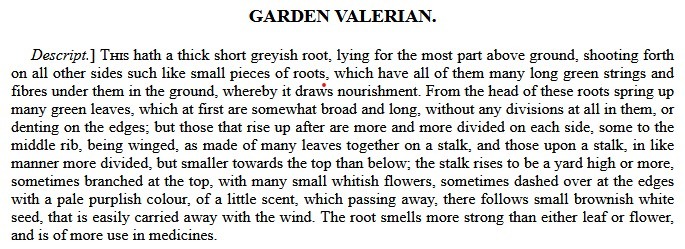
I couldn’t have said it better, myself!
Historical Context
A native of Europe and Asia, valerian was naturalized in North America. Hippocrates and Dioscorides were known to have used it 2000 years ago for its sedative effects. In ancient times, it was called “phu”, presumably because of the sound one made when getting a whiff of its less-than-pleasant odor. Ironically, in medieval times it was used as a perfume to lay between clothes as well as for spice and medicine. In fact, it was so esteemed in the middle ages that it was sometimes called “All Heal”. It’s primary use was for nervousness or hysteria, and also dyspepsia and flatulence!
In World War I, valerian was used by soldiers for shell shock, and also by civilians to reduce stress. In America, valerian was listed in the United States Formulary (a list of drugs and reference information still in existence) until 1946.
How to Grow
It’s easier to start valerian by root division. About 10 years ago I bought a plant from God Scent Herbs and put it in my herb garden. Within a few years it bushed out (see below), and then soon after I started noticing valerian “in places I hadn’t planted it”.
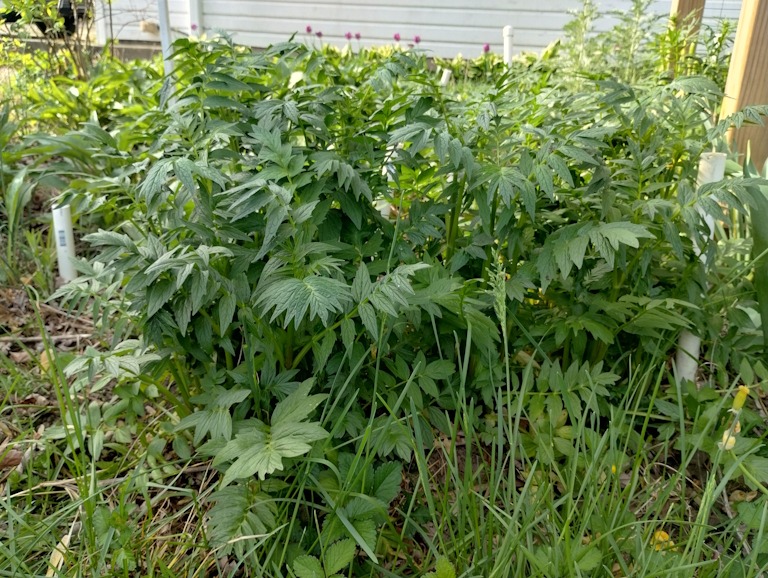
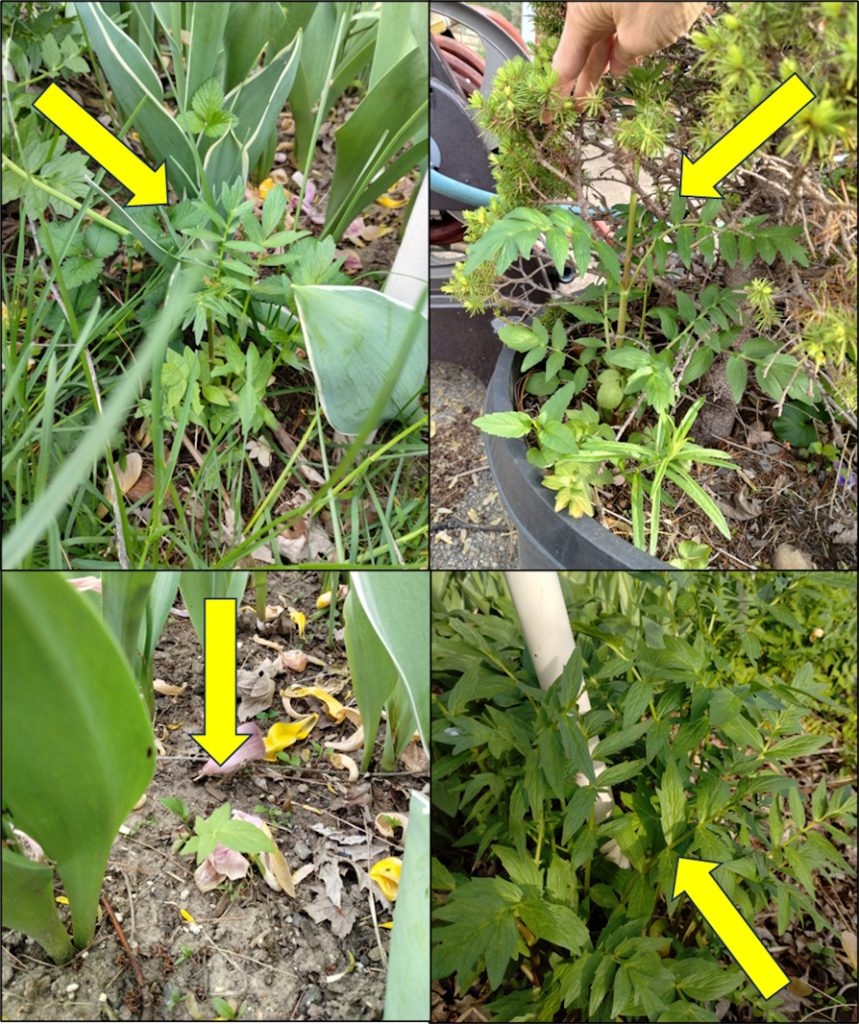
I started digging up the roots, which came out easily. I was able to further separate them into distinct plants for potting (which is how I ended up with 20!) I read that it’s challenging to start valerian from seed, but several of the places I found sprouts were far from the original, suggesting that it had spread by seed.
In any case, sow seeds near the soil surface in cool temperatures. Or separate roots and replant. Valerian needs moist, rich, loamy soil. It likes full sun but will tolerate part shade. I also read to compost and fertilize it regularly4, but I haven’t ever done that and the valerian doesn’t seem to complain.
Because the root is the medicinal part of the plant, you might like to cut the flowering stalk (before it flowers) so the plant will put more energy (i.e., therapeutic goodness) into the root.
How to Harvest
Speaking of energetic roots, it’s generally best to harvest roots in the fall when the plants are preparing for winter or early spring before they wake up. During this time of year, the above ground parts of the plant are dying off, and the root is focusing on hunkering down for harsh weather to come. Therefore, it’s thought that the highest concentration of the aforementioned therapeutic goodness will be present in the fall.
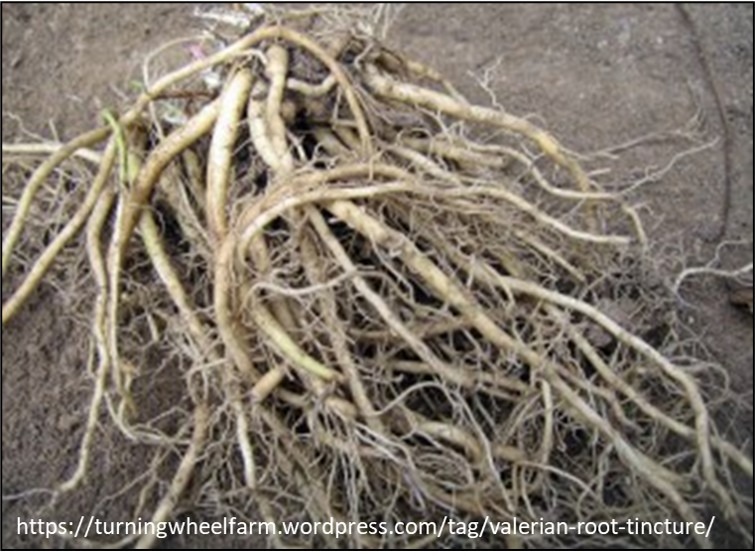
- Dig up the roots after the second or third year of growth once the plant dies back in the fall (roots may be too small if harvested earlier).
- Separate roots and replant some to perpetuate future harvests.
- Brush off dirt using a cornsilk brush or soft toothbrush.
- Rinse off roots very well with cool water. Be sure to remove all dirt.
- Chop roots into uniform pieces BEFORE drying – if you wait to do it after you’ll never get a knife through it.
- Dry using your favorite herb drying method. Mountain Rose Herbs has a nice article about this.
- Once fully dried, store in an airtight container in a cool, dark place.
Preparation
Tea
Despite the common rule of thumb to always decoct root herbs, it is recommended to infuse valerian root due to its active compounds being delicate and prone to break down.2,3 Use approximately a teaspoon of dried root per 2-3C boiling water. Cover and steep for 15-20 minutes. Strain and drink.
NOTE: Valerian root tea is VERY bitter, and is thought to smell like “dirty socks”. Indeed, when I walk by my valerian in the garden when it’s flowering, I detect a “unique” fragrance. Culpeper suggests to add raisins, licorice, and aniseed to the brew to make it more palatable1.
Tincture
I’m not going to go through the whole tincturing process here – again, refer to Mountain Rose Herbs’ fine article describing how to do it. I’ll just mention that tinctures of valerian are nice because of the bitterness – it’s still bitter but it goes down quicker. There is some debate as to whether it’s better to tincture the dried or fresh root. Herbalist Christopher Hobbs recommends using the fresh root to maximize the active constituent extraction. He indicates that drying the root and/or exposing it to light and oxygen start to break down those constituents.4
Medicinal Use
Research
It’s likely common knowledge that valerian is used to promote restful sleep, but what does that really mean? Herbs are not one-trick ponies; comprised of countless phytochemicals their actions are more complex yet nuanced. In terms of valerian, it seems that it’s actions are centered around “relaxing”, “calming”, or “sedating”. Here’s a summary.
Research has shown that valerian improves the (subjective) quality and (objective) latency of sleep for people who report having sleep issues. The benefits were noted after daily use (after around two weeks of continuous use). Because the active constituents of valerian are broken down in the body after roughly eight hours, there’s no associated hangover in the morning (yay!) as compared to other sleep aids.5
Note that there didn’t seem to be as much of an effect on sleep maintenance, and there was no meaningful effect on people without sleep issues.5
Valerian may also be used, at lower doses, to relieve symptoms of anxiety. In vitro (test tube) studies suggest that it influences GABA – a neurotransmitter than promotes calm.5 Sometimes valerian is called a “daytime sedative” because it can improve performance, concentration, and memory during the day while promoting better sleep at night.3
In keeping with the calming theme, valerian also has a physical effect on relaxing smooth muscle. This means that valerian can be used as an anti-spasmodic (think bladder, heart, stomach)6 as well as for shakiness, cough, headache, stress-induced hypertension, hyperactivity, irritable bowel disease (IBD), cramping, neuralgia, restlessness.3 Other reported research studied valerian for restless leg syndrome (maybe can help) and obsessive-compulsive disorder (higher doses improved scores on the Yale-Brown OCD scale)5.
This may all be a lot to remember, so I like to think of it as anything that may cause agitation in the body.
Comparison to Benzodiazepines (Tranquilizers)
Valerian was compared to “benzo” use, and the finding was that 600 mg of valerian was comparable to 10 mg of oxazepam in terms of sleep assistance – but without the hangover5. Indeed, valerian is sometimes used to help people wean off benzos to manage withdrawal symptoms (consult with your medical practitioner before trying this on your own).
Other Uses
Legend has it that the Pied Piper put valerian in his pockets to attract the rats out of Hannover (helps you sleep AND can be rat bait!). Some cats reportedly like valerian more than catnip – let me know if you have such a cat!
Traditionally, valerian was used by the Greco-Romans as a diuretic, carminative (relieves stomach spasms and gas), menstrual stimulant, or expectorant. Oil of valerian was used to treat cholera, and a fella named Fabius Calumna in 1592 reportedly used it to cure his epilepsy7 (do NOT try this at home!).
Topically, a compress (made from a tea) or a poultice can be used to relieve pain or draw out a splinter. The dried root can be made into a sachet and used as a sleep pillow. In the spring, young leaves can be eaten and/or juiced.3
Dosage
As with most herbs, valerian works best in combination with other herbs. For relaxing effects, combine with chamomile, passionflower, skullcap, lemon balm, or hops.
- Lower doses are used for anxiety – about 100mg/day of the dried root
- For sleep issues/insomnia – higher doses of about 600mg/day of the dried root
- In general, an infusion of 3 – 9 g of the dried root (titrate to desired effect)
- Liquid extracts
- More concentrated products (1:2 herb to liquid ratio) – 2-6 ml/day
- Less concentrated tinctures (1:5 ratio) – 5-15 ml/day
Cautions
Valerian is, in general, a very safe herb. Still, please note the following precautions before using it.
- While large doses may be overly sedating for some, they may actually be stimulating for others. Pay attention to its effect on you and modulate the dose accordingly.
- Use caution if you have low blood pressure or low blood sugar.
- Use caution if using in conjunction with benzodiazepines as valerian may produce an additive effect.
- Valerian is generally tolerated in children; however do not use in children under 3.
- Low doses are generally fine in pregnancy and lactation; however, consult your medical practitioner before using.
Wrapping it up
Still with me? I know this was a lot of information to digest, but I hope it was informative to you. Do try valerian root to promote restful sleep!
Still have questions? Feel free to contact me.
References
- Culpeper, N. (1653) The Complete Herbal
- Gladstar, R. (2012) Rosemary Gladstar’s Medicinal Herbs: A Beginner’s Guide
- Mars, B. (2016) The Desktop Guide to Herbal Medicine, 2nd Edition
- Hobbs, C. (2013) Grow It Heal Is: Natural and Effective Herbal Remedies from your Garden or Windowsill
- Braun, L. and Cohen, M. (2015) Herbs and Natural Supplements, An Evidence-Based Guide, 4th Edition
- Wood, M. (2008) The Earthwise Herbal: A Complete Guide to Old World Medicinal Plants
- Grieve, M. (1931) A Modern Herbal